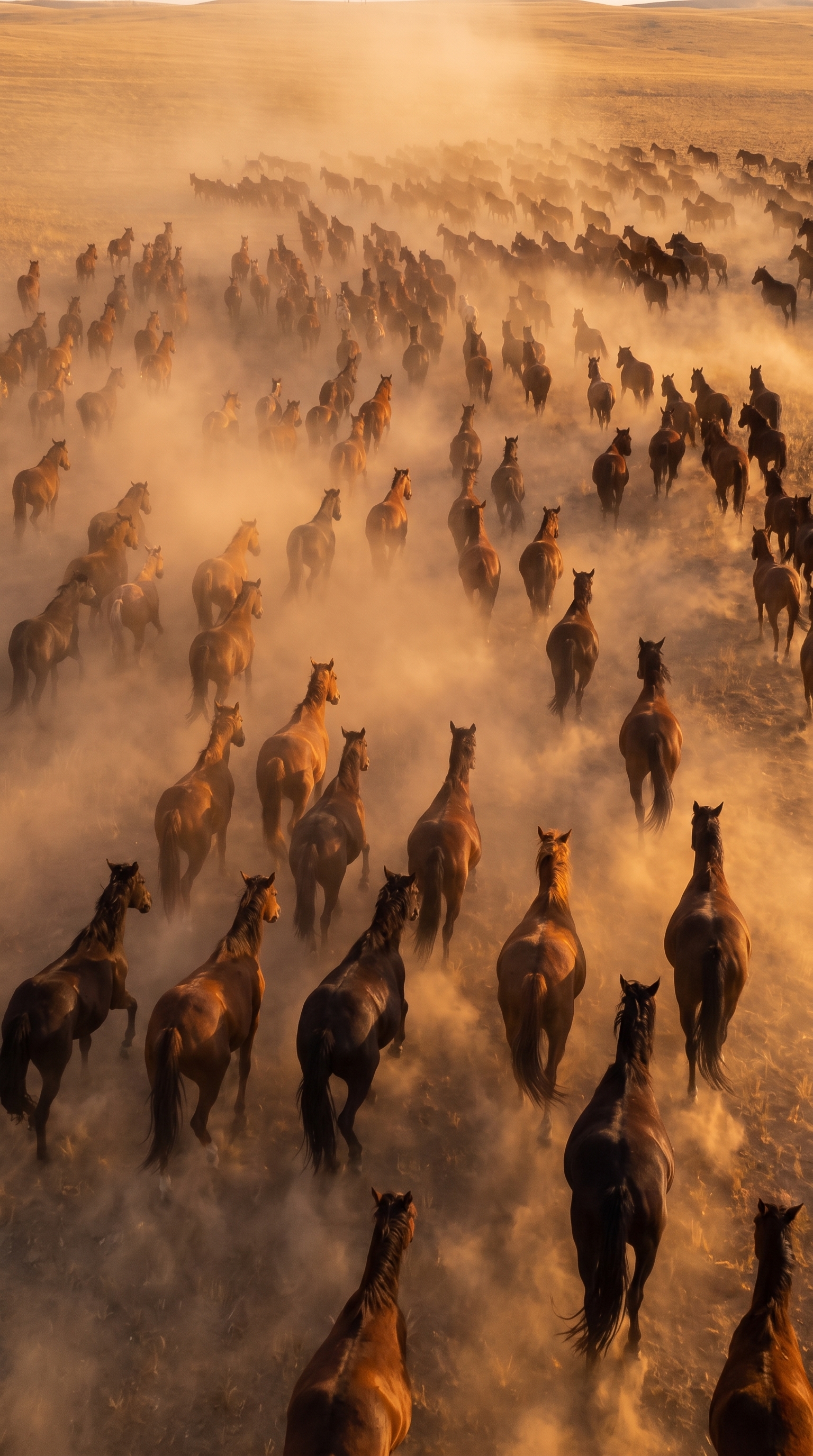

Use the reference image as the main visual reference. Preserve the same atmosphere, landscape, lighting, horse colors, composition style, realism, and overall cinematic feeling. Move the drone much closer to the herd. The camera is flying only 2 meters behind the last horses and approximately 2 meters above the ground, closely chasing the herd at full speed. The nearest horses fill the foreground of the frame, while the rest of the herd stretches naturally into the distance across the endless golden steppe. Large clouds of natural dust rise from the horses' hooves. The dust is thick, soft, and volumetric, glowing in the warm golden sunset light. Sunlight passes through the dust, creating a realistic cinematic atmosphere and depth. The dust must look completely natural, not like smoke. The horses remain exactly like in the reference image: dark brown, bay, chestnut, and black wild horses with realistic anatomy and muscular bodies. No white horses. Keep the same warm golden-hour lighting, endless dry grassland, and untouched steppe. No roads, fences, buildings, people, vehicles, or other objects. The image must look like a real aerial photograph captured by a DJI Inspire 3 drone during a National Geographic or BBC Earth wildlife documentary. Ultra photorealistic. Absolutely no CGI, no AI look, no illustration, no painting, no plastic textures, no fantasy, no unrealistic lighting. The result should be indistinguishable from a real drone photograph.
Free to start · Generate videos and images with AI in seconds