Image - 2026-08-11 18:32
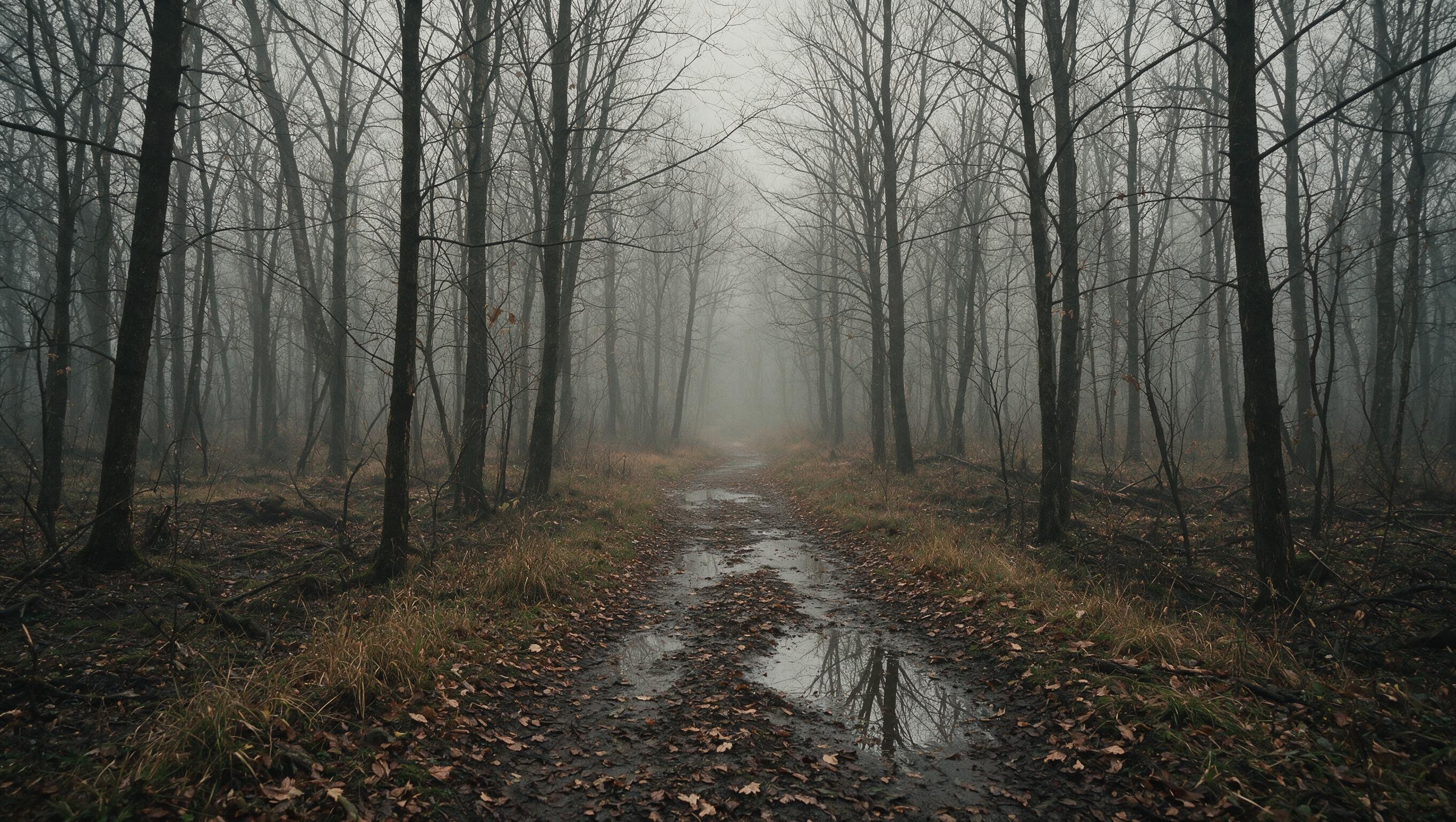
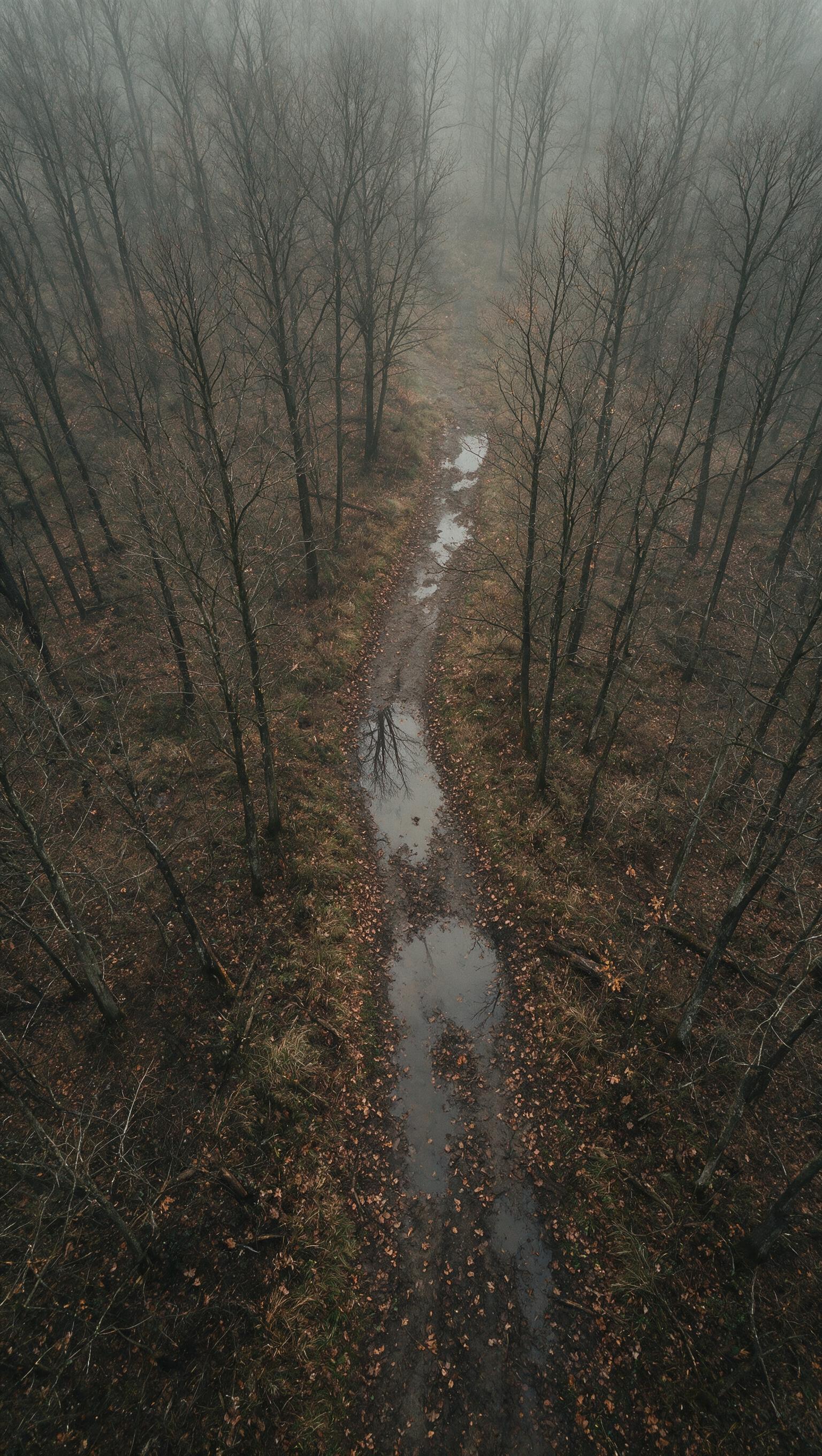
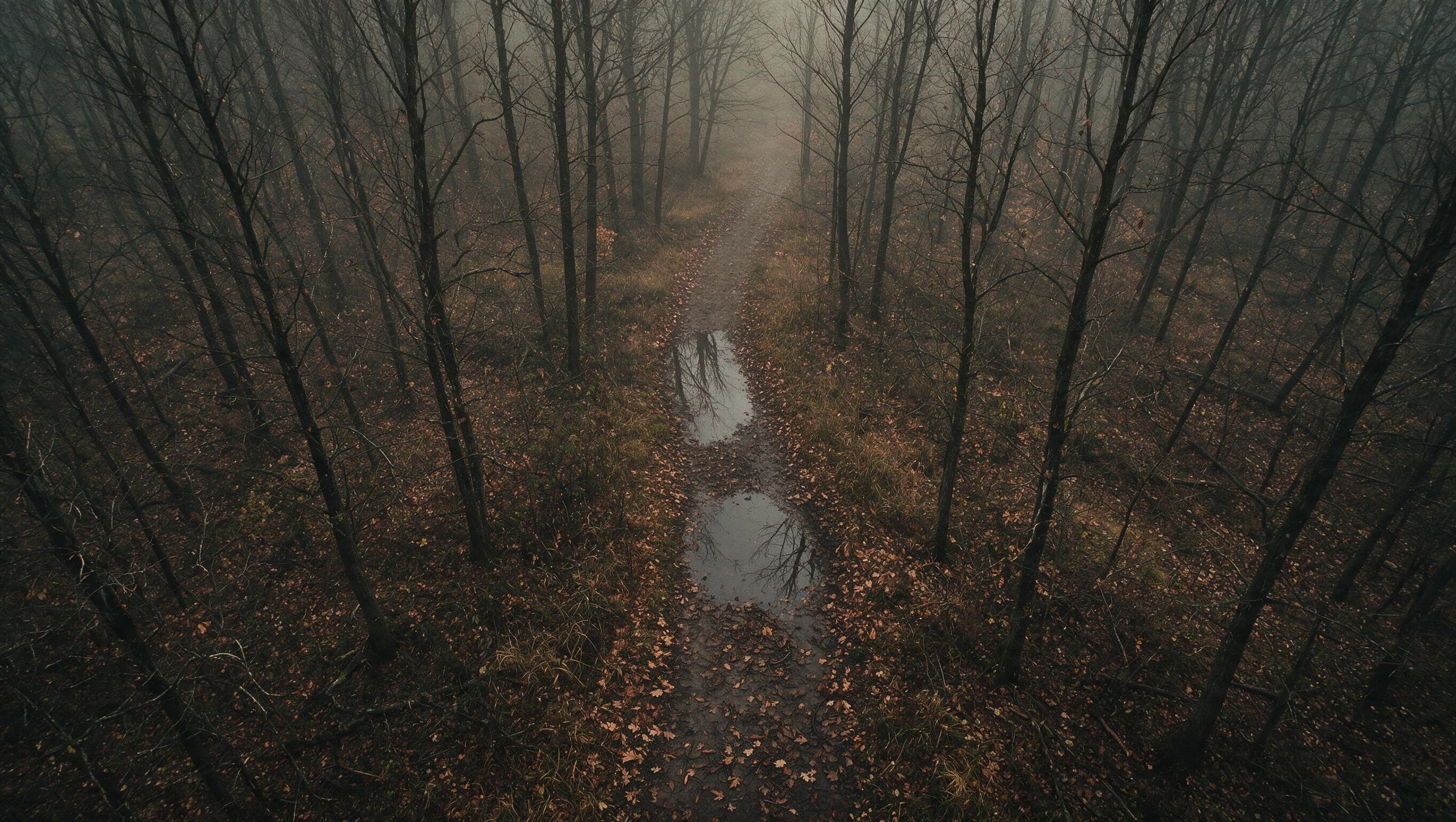
Use the uploaded photograph as the primary environmental reference. Reconstruct and expand the surrounding environment beyond what is visible in the photograph. Imagine that the camera is standing at this exact location inside the forest, and generate a believable continuous environment extending naturally in every direction — forward, backward, left, right and beyond the visible frame. Preserve the exact environmental identity of the reference image: a late-autumn deciduous forest, tall slender leafless trees, dense tangled bare branches, sparse remaining brown leaves, dry brown grass, dark wet soil, fallen autumn leaves covering the ground, muddy forest paths, irregular rain puddles, soft heavy fog, damp cold atmosphere, muted gray-brown and desaturated green colors, overcast diffused daylight. The photographed forest path should remain the central spatial anchor. Continue the same path naturally through the surrounding forest, preserving its approximate direction, width, muddy surface, puddles and vegetation. The surrounding forest must look like the same continuous location, not a newly invented forest. Generate plausible terrain that cannot be seen in the original photograph: natural variations in tree density, small clearings, groups of trees, fallen branches, exposed roots, patches of dry grass, wet depressions, muddy areas, subtle secondary animal trails and occasional fallen trees. Everything must follow believable natural geography. IMPORTANT: Do not simply mirror, duplicate or clone elements from the reference image. Do not create repetitive patterns. Do not invent buildings, roads, fences, signs, people, vehicles, power lines or artificial objects. Do not introduce a different biome, different season or different weather. Do not make the forest more beautiful, brighter or more dramatic than the reference. Do not add fantasy elements. The environment should feel like a real large forest surrounding the exact photographed location. Maintain consistent tree species, trunk thickness, vegetation density, ground texture, moisture, fog density, atmospheric perspective, color grading and lighting throughout the expanded environment. The closer terrain should contain clearly visible wet leaves, mud, roots and small vegetation. The middle distance should become progressively softer and more obscured by fog. The distant forest should gradually disappear into dense atmospheric mist. Create a coherent spatial world rather than a flat photographic extension. Every visible element must have a logical position in three-dimensional space. Photorealistic, natural documentary photography, realistic forest ecology, physically believable terrain, authentic autumn atmosphere, subtle cinematic realism, high environmental detail, no artificial symmetry, no surrealism. The final result should look as if the original photograph is only one small window into a much larger continuous forest environment that genuinely exists beyond the frame. Treat the reference photograph as a single viewpoint within a complete 360-degree environment. Imagine the camera position as a fixed point in space. Construct a consistent surrounding forest around this point so that if the camera were rotated 360 degrees, the environment would remain geographically coherent. The same forest continues behind the camera, to both sides and into the distance. Tree density, terrain elevation, vegetation, fog, moisture and lighting remain consistent in every direction. Do not create four separate scenes. Create ONE continuous geographical environment surrounding the camera position.

Free to start · Generate videos and images with AI in seconds
More by TviT
См. все →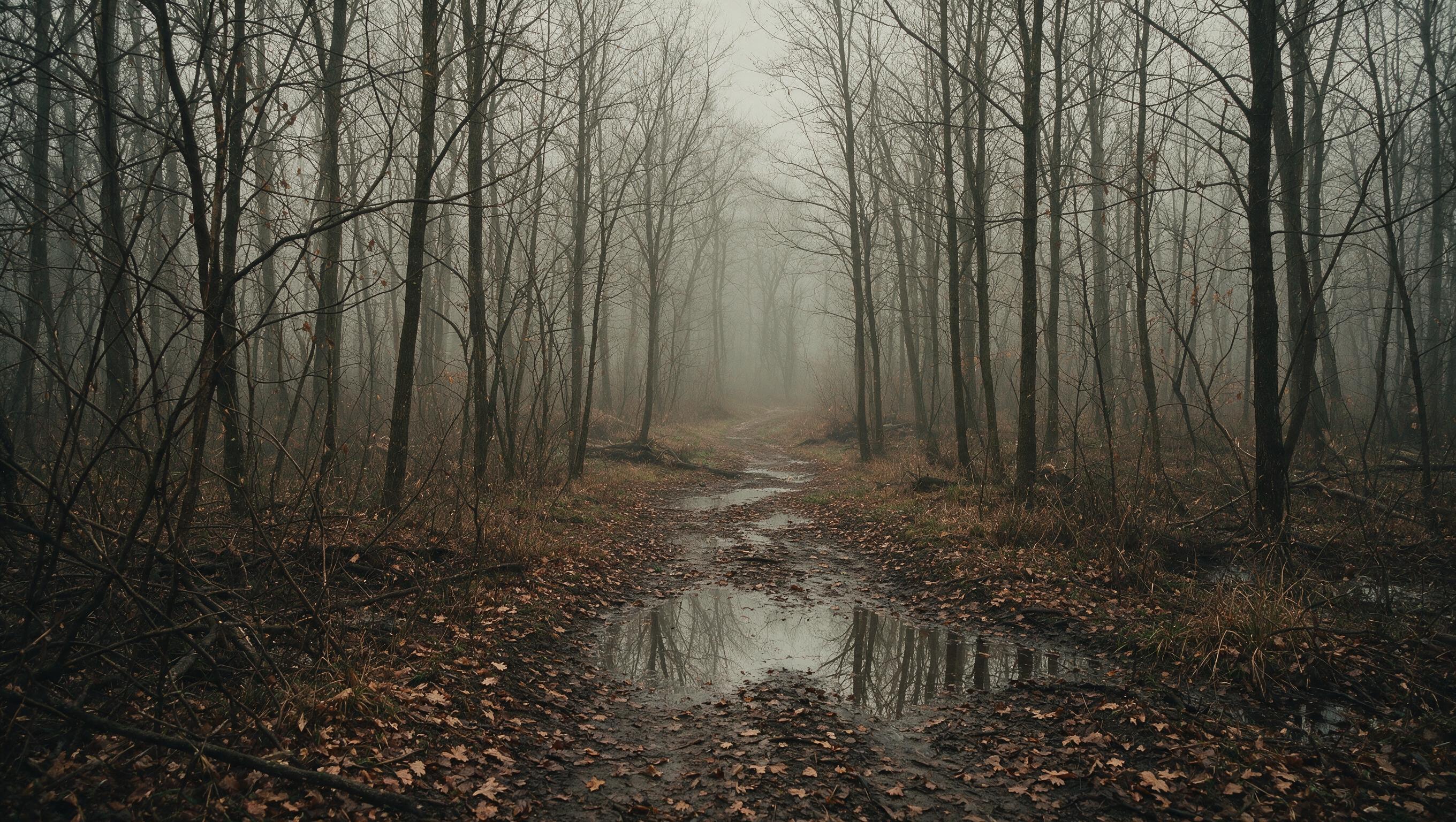


More Seedream 5.0 images
См. все →