Image - 2026-08-12 05:56
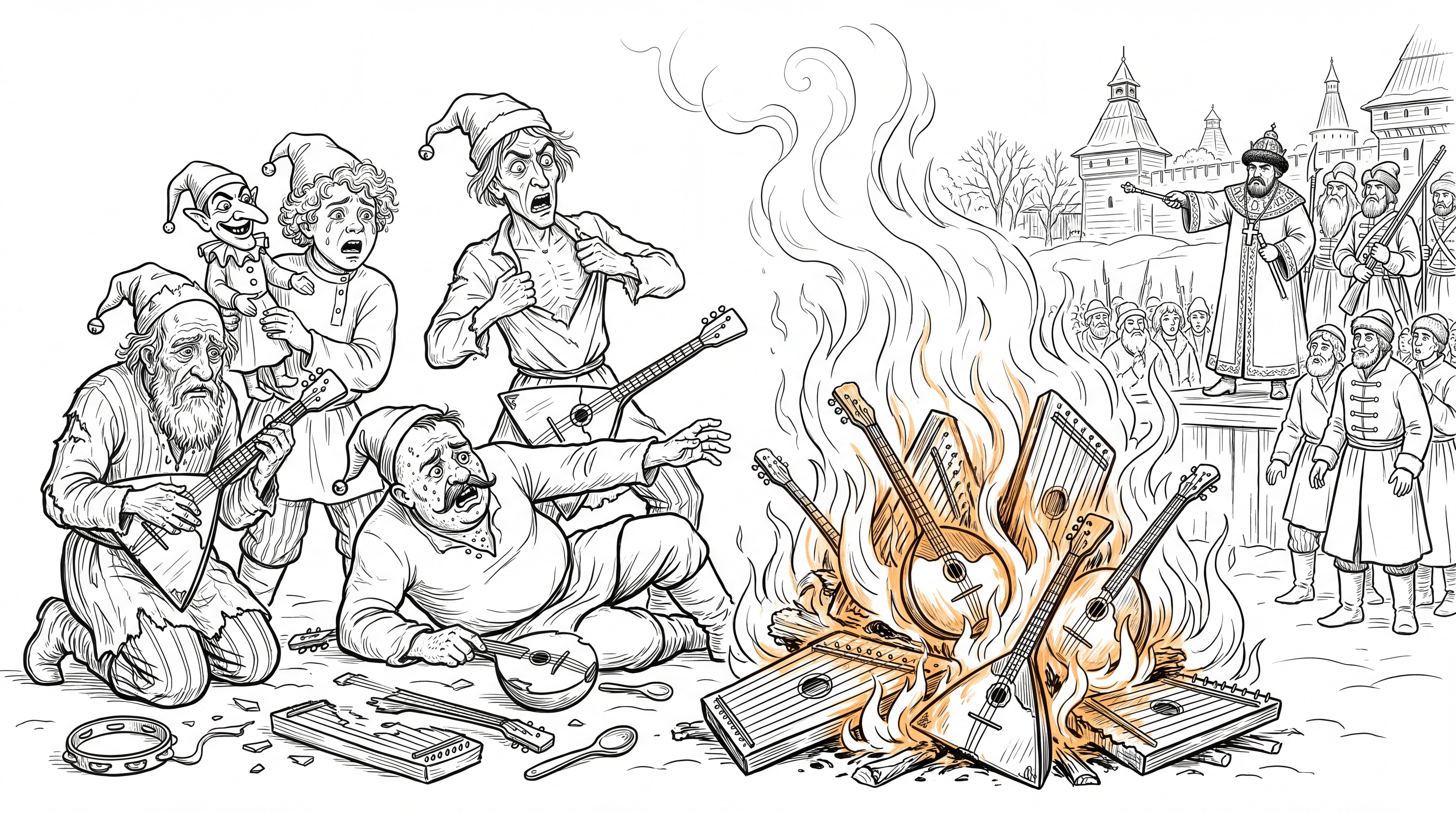
Pen-and-ink drawing in the style of Pushkin's manuscript illustrations, crisp black ink on clean white paper, ultra-wide panoramic composition, aspect ratio 2.39:1, 2048×858 resolution. Style and technique: Pure black ink, bold and confident — not grey, not faded, not pencil-like Crisp, clear pen strokes with varied line weight — thin elegant lines for faces, slightly thicker for contours, but always sharp and distinct Clean white background — no textures, no paper grain, no music staff lines, no borders Pushkin's drawing style — free, flowing lines with a slightly theatrical, romantic quality Light but confident touch — precise pen work Figures have correct human proportions — heads in proper relation to bodies, limbs correctly sized Clear, legible composition with figures arranged in distinct planes Minimal cross-hatching — mostly clean lines with occasional light parallel strokes for shadow High contrast black ink on white paper Each face is unique and expressive, but realistically proportioned Composition (left to right): Left foreground — Four skomorokhs with distinct individual faces: Old skomorokh (60+): Wrinkled, weathered face, thick unkempt gray beard, deep sad eyes. Kneeling, clutching a broken balalaika to his chest. Torn striped caftan, pointed kolpak with bells askew on balding head. Young skomorokh (20s): Round desperate face, wide tearful eyes, thick curly hair escaping from under kolpak. Half-crouched, holding hand-puppet Petrushka on his arm — the puppet with long hooked nose, pointed red cap, large mischievous eyes, wide grinning mouth, red shirt and wide trousers. The young man's mouth is open in a cry of grief. Stout skomorokh (40s): Fleshy pockmarked face, thick drooping mustache, small goatee. Sprawled on the ground, one arm stretched toward the fire, face contorted with agony. Broken domra beside him. His kolpak has fallen off, revealing a shaved head. Gaunt skomorokh (30s): Sharp angular face, high cheekbones, pointed nose, wild wide-eyed stare. Stands behind others, tearing at his own clothes in despair, mouth twisted in a silent scream. Broken balalaika over his knee. Scattered on the ground: multiple broken gusli, balalaika fragments, wooden spoons, tambourine. Center — Large Bonfire with many instruments: Massive bonfire with confident, flowing ink strokes and rising flames Numerous balalaikas burning in the fire — triangular bodies and long necks visible among the flames Many domras (round-bodied lutes) burning — their circular shapes glowing in the fire Several gusli (psalteries) burning — rectangular wooden frames with strings visible Instruments stacked and piled high in the fire, some half-burned, some already reduced to embers Flames wrapping around the instruments, consuming them Smoke rises in elegant swirling curls Right background — Raised platform: Tsar Alexei Mikhailovich in royal robe, fur-trimmed crown (shapka), holding a scepter, sternly pointing at the fire. Behind him: boyars with long beards and armed streltsy guards holding muskets. Background: Wooden towers of the Moscow Kremlin, winter bare trees, snowy ground, crowd of commoners in zipun coats and felt boots watching in horror. Technical: Monochrome, black ink on white paper, Pushkin illustration style, romantic and theatrical, correct proportions, clear composition, crisp lines, expressive faces, high detail in costumes and instruments, dramatic chiaroscuro, many burning instruments, --ar 2.39:1 pencil, graphite, gray, faded, washed out, light, sketchy, blurry, soft edges, watercolor, paint, woodcut, lubok, thick outlines, heavy shading, digital art, 3D, realism, photograph, colors, sepia, brown, paper texture, music notes, staff lines, border, frame, distorted proportions, cartoonish, empty fire, few instruments, small fire, weak fire
Free to start · Generate videos and images with AI in seconds
More from this creator

More Kie.ai images
См. все →